Ngāi Tahu have a long association with Central Otago and Southland and its rivers, with values of kaitiakitanga, mauri, wāhi tapu, wāhi taoka and traditional ara or trails. Trails ran up Te Papapuni (the Nevis River) and through Nokomai. Māori trails in the South Island high country provided significant social and economic links. These trails tended to follow valleys. The importance of the rivers to iwi is illustrated by their inclusion in the Otago Regional Plan – Water 2004. Tūtūrau chief Reko (c.1803-1868) led pastoralist Nathanael Chalmers from the Mataura River to the Nokomai and into the Nevis River in 1853, the first European to see the remote valley. Reko, who had lived near Kaiapoi, and who had shifted close to Tūtūrau in Southland, had a detailed knowledge of the interior, drawing maps for visitors. He became a well-known guide.
The Otago Gold Rushes
Europeans soon found their own value in the hills and rivers. The Otago gold rushes followed on the heels of the Californian rushes of the late 1840s and early 1850s, and the Australian rushes of the mid to late 1850s. Many miners followed the gold finds around the Pacific, bringing the knowledge, technology, and experience of previous fields. Such is true of some of both the European and Chinese miners.
There had been reports of the presence of gold in the Otago Province throughout the 1850s, which met with official suspicion and discouragement to preserve order. Gabriel Read’s 1861 discovery near what is now Lawrence led to a surge of prospectors who followed the new discoveries around the Otago and into northern Southland. Prospectors explored to Nokomai, near the southern tip of Lake Wakatipu, and the Nevis River. Following in their wake were the Chinese miners, who arrived in the mid-1860s.
The Chinese Miners
The gold seekers in Otago included around 10,000 Chinese men, and despite their relatively late arrival, they constituted ‘one of the largest and certainly the most conspicuous ethnic group on the goldfields.’ The majority of Chinese people who came to New Zealand in the nineteenth century were from the clans of Poon Yue, Nanhai, Zang Sheng and Si Yap. Their aim was to earn £100 as fast as possible to return to China with enough money to buy a plot of land.
Chinese miners were familiar with alluvial mining, and also the principles of hydraulic engineering used for irrigation in China. Some also had mining experience in other goldfields. Chinese miners tended to move together, and live separately from Europeans because of the anti-Chinese feeling rife among European miners.
Many Europeans opposed Chinese immigration. Opposition came to a head in 1881 when a poll tax was introduced along with other racist legislation. Despite the racism, some Chinese miners managed to make a successful living and others made an important contribution to the economy of Otago. Choie Sew Hoy and his associates were foremost among these.
Chinese miners faced open racism on the goldfields and legalised discrimination through the 1881 Chinese Immigrants Act, which imposed the £10 poll tax (equivalent to nearly $1700 in today’s currency) on Chinese migrants, and restricted the number who could come to New Zealand. In 1896, the tax was increased to £100 ($19,000). Anti-Chinese associations were formed to oppose Chinese immigration. The poll tax was waived from 1934, but not repealed until 1944. In 2002, the New Zealand government officially apologised to the Chinese community for the injustice of the tax.
Choie Sew Hoy (c.1838-1901)
Choie Sew Hoy was a Dunedin merchant and importer, businessman and investor in gold mining operations, as well as a public benefactor. He was born in Sha Kong, 20 kilometres north of Guangzhou in the Upper Panyu District. As a young man, Choie Sew Hoy joined other Cantonese gold seekers, going first to California, and then to Victoria. Historian James Ng suggests that Choie Sew Hoy came to New Zealand in 1868, and set himself up as a merchant in Dunedin. Sew Hoy had become prominent by 1871 and encouraged Panyu Cantonese migration to Otago in the early 1870s.
Sew Hoy was one of several Chinese merchants who had stores around the Stafford Street area in Dunedin. Sew Hoy was naturalised in 1873. He married Young Soy May and they had a daughter and two sons. When he was about 50, he formed a de facto relationship with Eliza Prescott, with whom he had had two children. On his death in 1901, Sew Hoy was buried in the Anglican sector of the Dunedin Southern Cemetery but was disinterred by the Cheong Shing Tong (the benevolent society of Panyu and Hua migrants, run from Sew Hoy’s store and led by Sew Hoy and later his son) the following year to be taken back to China. Sew Hoy was admired by the Chinese community for his public spirit and was honoured with a special rimu coffin as a mark of this respect. Unfortunately, the ship returning his and the remains of 498 other Chinese men who had died in New Zealand to China, the SS Ventnor, struck a rock and sank off Hokianga, and only ten coffins floated ashore.
Sew Hoy advised, outfitted, provisioned and otherwise helped Chinese gold seekers. He also supplied Chinese stores in the goldfields. He and son Choie Kum Poy used the credit ticket system to bring out kinsfolk and friends of the family to work their gold dredges and gold-sluicing claims. In exchange for the fare, the emigrant agreed to work out the debt on arrival. Choie Kum Poy brought out his last group of six workers in 1923.
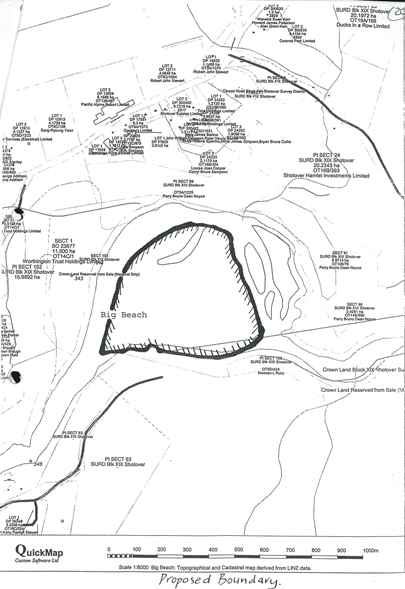
Choie Sew Hoy was responsible for two major mining revivals, one in Otago and the other at Nokomai in northern Southland. He had mining interests throughout Otago including at Mt Ida, Skippers, Kyeburn and Big Beach. Choie Sew Hoy was the principal person involved in introducing a new type of steam dredge that opened up ground for a new system of mining, prompting the creation of a large dredging fleet, and sparking an economic revival in Otago at the turn of the century. Historian James Ng could think of no other nineteenth century Chinese who gained as much wealth from gold mining and only one other (Chew Chong in Taranaki) who gained as much wealth or standing in New Zealand.
The Sew Hoys at Nokomai had an unusual permanency and stability. While other alluvial mining companies came and went, the Sew Hoys either headed or were close to the head of the list of successful alluvial miners for 50 years. Only major companies at Round Hill (in Southland) and Gabriel’s Gully had anything like a similar record. The Nokomai Hydraulic Sluicing Company headed all others in gold returns for nine years. From 1919 and especially after 1923 the company’s gold return diminished. In 1926, the company was restructured as the Nokomai Sluicing Company, and sluicing was shifted from the higher ground (Paddys Alley and Victoria Gully) to lower flats at Nokomai. Before restructuring the original company (1898-1926) had won 55,991oz of gold and paid £54,683 in dividends. According to James Ng, Choie Sew Hoy decisively proved that the early New Zealand-Chinese had the capacity for large-scale mining projects and that the Chinese could successfully enter the European commercial world. His pioneer role in the development of gold-dredging was recognised in his time.
Ng argues that Sew Hoy was one of ‘Otago-Southland’s most enterprising, innovative and important gold miners. Because he was prominent in both gold-dredging and sluicing, and because he led two mining revivals, I consider him to have been the most important figure in the higher technical and capital input phase of Otago-Southland gold mining last century.’ In addition, Ng considers that ‘despite the prejudice and discrimination, the early New Zealand-Chinese produced two pioneers of remarkable standing in their adopted community: Choie Sew Hoy in gold-dredging and Chew Chong in butter manufacture.’
Nokomai Valley: Pastoralism and Gold
Nokomai was divided into pastoral runs in the late 1850s, the Nokomai Flats first occupied by Donald Angus Cameron, who named the valley Glenfalloch (Hidden Valley). Cameron lived on the station until his death in 1918, a period of occupation of 59 years. Glenfalloch remained in the hands of the Cameron family until 1950, when it was bought by Francis Hore, who renamed it Nokomai, and extended the boundaries of the station.
Gold was discovered in Moa Creek (later known as Victoria Gully) at Nokomai in 1862. Miner James Lamb reported that there was a large area of auriferous land bordering on Nokomai and extending over the dividing range to the Nevis and onto the Kawarau River. An area of 281,600 acres was formally designated as the Nokomai Gold Field. The rush quickly subsided, although there were two minor rushes the following decade. Miners worked the spurs of the ridges and the terraces.
Nokomai township was established on the valley floor. At its greatest extent around 1873, the town had three hotels, a shop, stable and smithy, the school and a few scattered huts. By 1874, only 150 people lived in the area, 120 of whom were Chinese. By 1886, the township had only one dilapidated building acting as a store and hotel. After the West Coast rushes the Nokomai’s population dwindled. There was a brief revival in the mid-1880s, but by 1887, there were only 20 Chinese and 7 Europeans working. The flats were virtually abandoned around 1890. Choie Sew Hoy and Choie Kum Poy were to change all of this. With the advent of the Sew Hoy’s hydraulic excavators, mining continued steadily until about 1940, a long time for an Otago gold field.
Sew Hoy’s Nokomai Hydraulic Sluicing Operations
Sew Hoy’s Nokomai sluicing company has a special place in Otago’s mining history. Archaeologist Jill Hamel writes that the Sew Hoy’s Nokomai operation was one of the longest running and most prosperous mining ventures in Otago and Southland. When Choie Sew Hoy and his son went to Nokomai in 1894, their efforts led to a mining revival that encouraged large numbers of miners to return to the district with renewed hopes.
Sew Hoy and his two sons Kum Yok and Kum Poy had been looking for other mining opportunities as early as 1893. They chose hydraulic sluicing and elevating at Nokomai and took up claims of 60 acres of high flats in the upper valley of the Nokomai River. They hired up to 40 men and installed a hydraulic sluicing and elevator plant. At Nokomai, Sew Hoy proposed to bring water by first one and then two new long water races, to be constructed by workmen through rugged terrain using inverted siphons instead of flumes. Sew Hoy’s workforce included both Chinese and Europeans.
In 1894, two special claims over 120 acres were granted to Choie Sew Hoy and Kum Poy. The gold bearing deposits were below the level of the water table and required hydraulic elevators to retrieve the gold, a method used also at St Bathans and Blue Spur (near Lawrence). The Nokomai venture was working by December 1894, and was known as the ‘Sew Hoy Nokomai claim.’ Sew Hoy’s sluicing operation was one of the few non-dredging operations that attracted notice and technical praise during the late nineteenth-century dredging boom.
In 1896, Sew Hoy’s Nokomai company employed 30 men, of whom 12 were Europeans. In 1897, Kum Yok returned to China, and Choie Sew Hoy and Kum Poy carried on the company. The Sew Hoys still had insufficient water and brought down another race from Donkey Flat that carried 24 heads of water. This was, according to archaeologist Jill Hamel, the major race using the Nokomai River.
The Mines Department records three major races built by the Sew Hoys to Nokomai Flat, but only the one from Donkey Flat was clearly identified. The big race from Fosters Creek and Diggers Creek at the foot of the Hector Range already existed in 1888, and in 1894, the Sew Hoys either widened the old race or built a parallel one.
By 1897, the Sew Hoy’s Nokomai Hydraulic Gold Mining Company had a claim of 128 acres and had constructed ten kilometres of water races, giving a total of 20 miles to which the company had rights. One race included 2 siphons of 3,400 and 720 feet [1036 m and 200 metres] respectively, made of pipes 18.5 inches [47 centimetres] in diameter, carrying 15-20 heads of water, and delivering 550 feet of pressure to the elevators. There were two sets of elevators working with 2050 feet [624 metres] of main line steel pipes and 1335 feet [407 metres] of service pipes for elevating and sluicing the drift. A Pelton wheel drove a three horsepower motor for the dynamo which provided electric light. The elevators were working down into 45 feet [14 metres] of gravels with no large boulders and using 11 heads of water elevated the wash 65 feet [20 metres]. Even with the race building, one month each year was lost from lack of water. The whole enterprise cost £15,200 pounds and employed 12 Chinese and 8 Europeans, as well as the 40 men employed to cut another water race.
In 1898, the company completed the installation of two hydraulic sluicing and elevating plants and completed the first two water races of 42 and 34 kilometres respectively. They were also constructing their third and fourth water races and were employing some 20 men on sluicing and another 20 men on races. The Otago Witness commented ‘It is not saying too much that at the time no private individuals other than [Sew Hoy and Kum Poy] could have been found in New Zealand adventurous enough to invest a sum of £15,000 in this undertaking….’
Father and son floated the Nokomai Hydraulic Sluicing Company in 1898, issuing 2,400 shares at £10 each. Sew Hoy and Kum Poy became the biggest shareholders, each holding 850 shares, and they respectively became the company’s director and secretary. The share list included well-known Otago people, several who had been shareholders in both the Shotover Big Beach Gold Mining Company and the Sew Hoy Big Beach Gold Mining Company. In 1898, the sluicing returns of the Company were 100oz to 200oz of gold a month.
By 1898, Sew Hoy’s Nokomai sluicing claim was a ‘marvellously rich sluicing claim [with] splendid water rights and capital plant.’ It yielded £7,000 for three months’ work. The key to the success of the venture was its long, well-engineered water races that ran from the Nevis River to Nokomai.
The Roaring Lion Race – Expansion of Mining
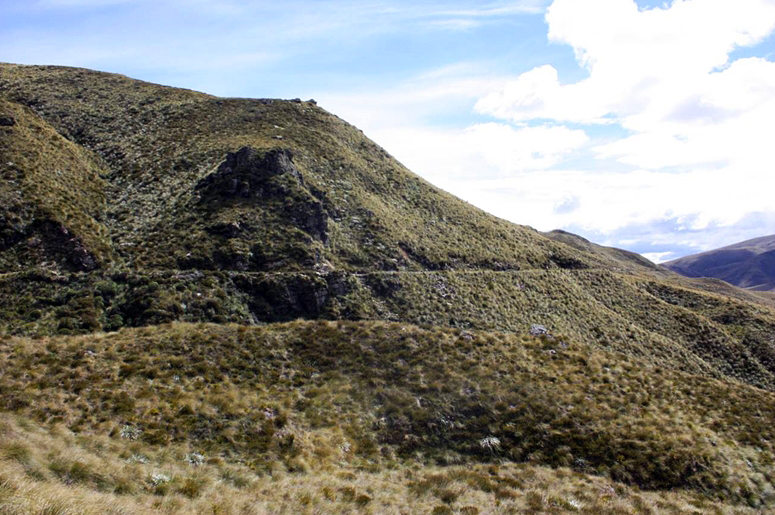
In 1899, the Golden Lion Sluicing Company cut an over 40-kilometre long, 25 head water race from the Roaring Lion Creek to the Nokomai Valley. The race took 3 years to complete, cost £11,000 and supplied around 600 feet of head. The race started at the headwaters of the Roaring Lion Creek and finished at the sluicings opposite the Nokomai homestead. The Sew Hoys bought the Golden Lion Sluicing Company and the race in 1906 and used it to work all three of their claims. To work the No.3 claim in Victoria Gully the water from the race was transferred into the race system from Donkey Flat, across the Nokomai River in a big siphon above the confluence with Bullock Head Creek and down the south-east side of the valley to Victoria Gully.
The Sew Hoys built a dam at Donkey Flat in 1903. Hamel described it as having breast work of 40 feet [12 metres], backing water up to cover 17.75 acres [7 hectares]. Three years later it was described as 26 feet high [8 metres], to be raised another 10 feet [3 metres] to add another eight acres [3.2 hectares] of water. The increased water supply from this dam, and the Roaring Lion Race may have allowed the Sew Hoys to increase their workforce from about 15 to 30 men and then to 60 men by 1908. From 1911 to 1914 the Nokomai Hydraulic Sluicing Company headed all other registered alluvial gold mining companies in New Zealand and paid steady dividends. During 1914 to 1918 the No. 3 plant on the old Lion Sluicing claim in Victoria Gully was moved down the creek and back into Victoria Gully where the No. 2 elevator was still working. The No.1 elevator was closed down about 1914.
The Sew Hoys worked steadily and prosperously in Victoria Gully until 1927. In 1927, they shifted out onto the Nokomai Flats to build a large hydraulic elevator and extended their water races. Lengths of pipe were laid, extending the No.2 water race across Victoria Gully, and further extending it around a mile (1.6 kilometres) to the penstock overlooking the claim . The penstock consisted of 800 metres of pipes delivering 25 heads of water with a pressure of 400 feet. The No.1 race delivered water from the Roaring Lion Race and the Diggers Creek Race coming in over Nokomai Saddle. A branch race of 5.6 kilometres carried the water to a penstock 480 metres long at a pressure of 560 feet.
The paddocks which these water systems were gouging out were on the west side of the valley, up to 82 feet [25 metres] deep and one of them 140 by 40 metres. The paddocks were regularly backfilled when adjacent ground was worked. Jill Hamel considers that it ‘is difficult to know whether these paddocks are still visible features of the landscape.’
In 1932, the company was restructured into the Nokomai Gold Mining Company, with the assistance of mining associate James Fletcher (1886-1974), in order to use the technologically new dragline excavator on new claims at Nokomai. Kum Poy (1867-1942), who had taken over his father’s mantle (and had adopted Sew Hoy as his English surname after his father’s death), was described by Fletcher as ‘a remarkable man whose word was his bond and even in adversity he never accepted defeat.’ The older company had not done well, due to the poor auriferous ground, and it was hoped the new method would reverse the decline. The excavator failed when it struck a very hard layer, and the company closed down in 1943, after a flood and Kum Poy’s death the previous year. After Kum Poy’s death operations ceased entirely, ‘leaving a record in the mining archives of remarkable achievement.’ The claim was incorporated into surrounding farmland.
From 1989 L&M Mining Limited reopened some Nokomai mining sites and, using new technology, achieved some good returns.
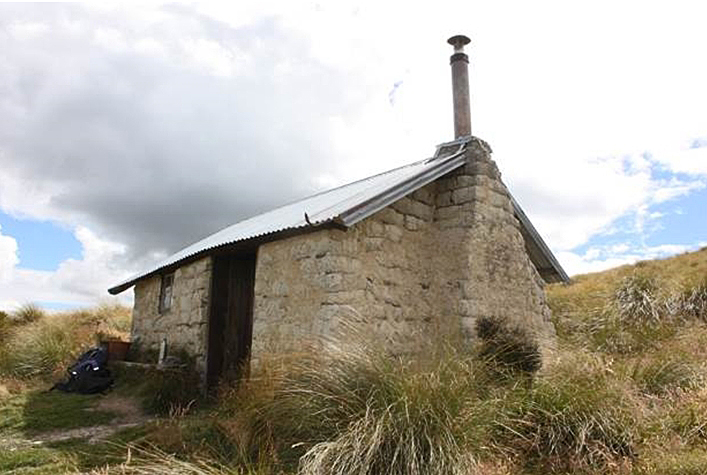
In 1990, the sod raceman’s hut on the Roaring Lion Race was restored with the help of volunteers, Department of Conservation and the 1990 Commission. In the 2000s, the landowner (supported by the Department of Conservation) built a private trail – called the Roaring Lion Trail – on private land designed as a single track, cross country mountain bike/hiking trail. The trail has been hand built along the course of part of the Roaring Lion water race, preserving and recognising the historic and archaeological features along the way. In 2017, the trail can be booked for walking and biking, and the former raceman’s hut can be booked for overnight accommodation. There are plans to extend the trail to include features at Donkey Flat, recognising the importance of this historic landscape.